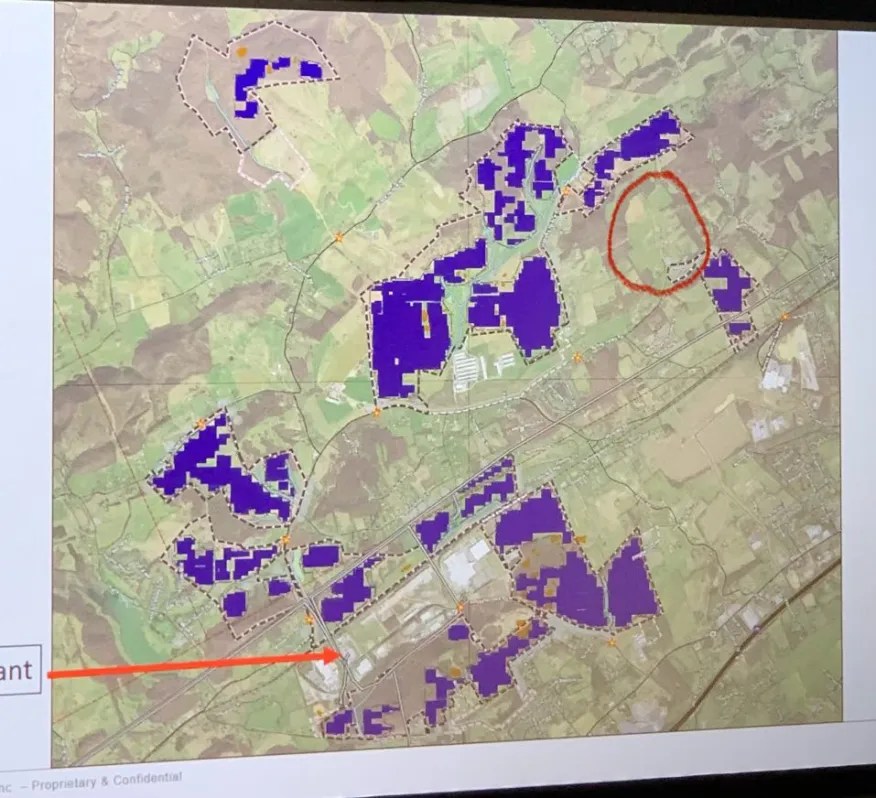
Legislative panel supports solar energy at Cortland Standard Airport
Solar Energy
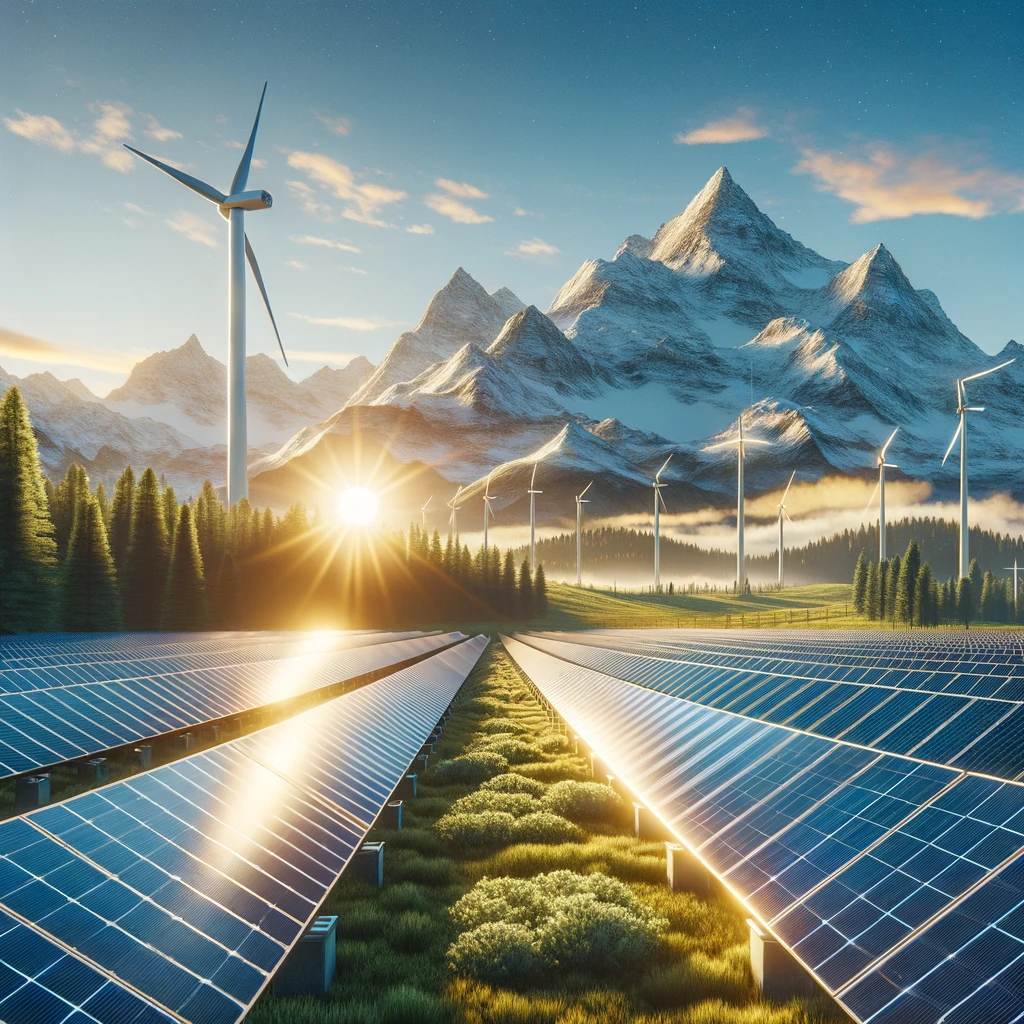
Harnessing the Sun: The Rise of Solar Energy in Canada
Welcome to the Solar Revolution in Canada
You’re standing at the forefront of an energy transformation that is sweeping across the globe, and Canada is no exception. The push towards renewable energy sources is gaining momentum, and solar power is leading the charge. Why solar? Let’s dive into the radiant world of solar energy in Canada and uncover its untapped potential together.

The Sunlit Path Ahead: Canada’s Solar Landscape
Canada, with its unique blend of vast landscapes and diverse climate, is a surprising contender in the realm of solar energy. From the sun-drenched plains of Alberta to the rooftops of urban Ontario, solar panels are not just capturing sunlight but also the imagination of a nation eager for a cleaner, more sustainable future.
Shining Opportunities: Benefits of Solar Energy in Canada
Economic Growth and Job Creation
Embracing solar energy isn’t just about reducing carbon footprints; it’s also a golden opportunity for economic growth. The solar industry in Canada is thriving, bringing with it a wave of new jobs and innovation. As you consider the future, envision the vast array of opportunities that lie in the manufacturing, installation, and maintenance of solar technology.
Environmental Impact and Sustainability
The environmental benefits of solar energy are profound. By tapping into this inexhaustible resource, Canada can significantly reduce its reliance on fossil fuels, thus making a substantial impact on lowering greenhouse gas emissions. Imagine a future where clean, renewable energy powers our homes, businesses, and vehicles. That future is not as far off as it might seem.
Illuminating the Challenges: Overcoming Barriers
While the prospects are bright, the path to a solar-powered Canada is not without its shadows. Initial setup costs, the need for technological advancements, and policy barriers are just a few hurdles. However, with continued investment in research and development and supportive government policies, these challenges can be overcome. Think of it as planting seeds today for a greener tomorrow.
Powering the Future: Solar Innovations and Technologies
From high-efficiency solar panels to cutting-edge storage solutions, technological innovations are key to unlocking the full potential of solar energy in Canada. Picture a world where every new building is designed with solar integration in mind, where roads and vehicles contribute to energy generation. This is not just a dream—it’s a possibility with the power of innovation.
The Solar Energy in Canada FAQ
Now, let’s tackle some of your burning questions about solar energy in Canada.
- Is solar power viable in Canada’s climate?
- Absolutely. Despite its northern latitude, many regions in Canada receive ample sunlight, particularly in the summer months. Advances in solar technology also mean that modern panels are more efficient, even in lower light conditions.
- What are the costs associated with going solar?
- The initial investment in solar panels can be significant, but various federal and provincial incentives can help offset these costs. Plus, the long-term savings on energy bills and the increasing affordability of solar technologies make it a wise investment.
- Can I really make a difference by switching to solar energy?
- Every solar panel installed contributes to reducing reliance on fossil fuels, lowering greenhouse gas emissions, and promoting a sustainable energy future. Your choice to go solar has a ripple effect, inspiring others and contributing to a more significant change.
Conclusion: The Dawn of a Solar Era in Canada
As we look to the horizon, the future of solar energy in Canada shines brightly. The journey towards a sustainable, solar-powered nation is filled with promise and potential. By embracing solar energy, Canada can lead by example in the global shift towards renewable energy, ensuring a cleaner, greener planet for generations to come.
Your role in this transformation is pivotal. Whether you’re considering installing solar panels on your home, advocating for renewable energy policies, or simply seeking to learn more, your actions are the driving force that propels us closer to a sustainable future. Together, let’s harness the boundless energy of the sun and pave the way for a thriving, solar-powered Canada.
Norwood is fighting to stop a solar farm from moving in
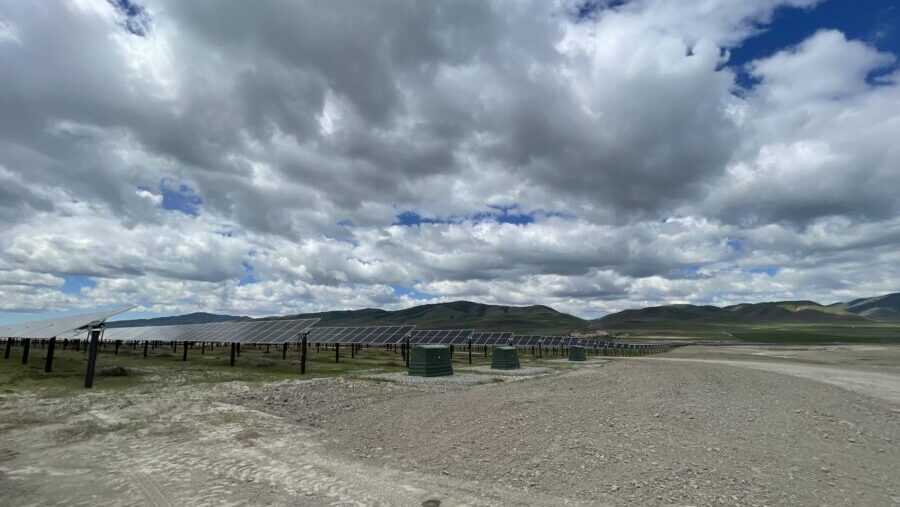
NORWOOD, Colo. (KREX) — Norwood is a remote town of just 500 people between Nucla and Ridgway on Wright’s Mesa.
Fields and forests surround the city, with single cone mountains watching.
Norwood Mayor Candy Meehan tells Western Slope Now the city is fighting a long-term battle — a company called One Energy is trying to build acres of solar panel sites in the heart of its wooded areas and communities.
Let’s start from the beginning…
Governor Polis hopes to achieve 100 percent renewable energy by 2040. His administration has encouraged renewable energy companies to build on small amounts of public land originally earmarked to lease and generate revenue for public schools.
Norwood library director Carrie Andrew told me that in May 2023, One Energy came to the library to present its plans to residents and San Miguel County officials.
Residents immediately spoke out against the plan — more than 200 people met in person and about 40 participated via zoom. It was the largest meeting recorded in the city’s history. No locals were happy with One Energy’s development.
After the meeting, San Miguel County placed a moratorium on solar installations to develop new regulations while this fight continues.
Candy, Carrie and local Demian Brooks say the sun is welcome, but not on the 640 wooded acres One Energy wants to build.
When local residents tried to reach One Energy through the email officials provided at the meeting, they made a shocking discovery that soured their first impression of the company — they were given the wrong website … and a dead email.
Demian tells West Slope Now that since then, local residents have attended eight meetings about the solar project, the most recent one between San Miguel County commissioners and the planning department on March 27 covering the new codes.
These new codes will guide use on all of Wright’s Mesa, including the square mile section in question.
Candy said Sen. Chris Hansen, who serves the Denver area, has introduced an energy bill that locals fear will drown out Norwood’s voice.
So why is Denver representative and San Miguel County planning director One Energy pushing so hard for this forested land, and why are local residents opposed? I will take a closer look at the second part of this heated debate.
Space Solar Really Really Is Not So Spacy Any More
Sign up for daily news updates from CleanTechnica via email. Or follow us on Google News!
The idea seems strange at first glance, but the race to launch an orbiting solar power plant into space is heating up, with the United States and Great Britain also competing. In the latest news, a UK startup with the ambitious name Space Solar expects a demonstration model of their device to be in orbit within the next three years, delivering solar energy to a receiver on Earth 24/7, regardless of the weather. If you think similar technology could be applied to the remote charging of EVs, read on.
Actually, Space Solar is not Kooky
CleanTechnica caught up on the latest US space solar news in January, when we noted that space solar power is nothing new. After all, the expensive orbital solar arrays of the 1950s paved the way for today’s low-cost ground-based solar innovations.
As for why the space-to-Earth connection has taken so long, we also noted obstacles including “scale, cost, the delicate maneuvering required to deploy a solar array in space, and the ability of solar cells to withstand the harsh environment.” The space environment, including solar flares and geomagnetic activity.
“NASA also notes that space solar arrays will have to maintain a geostationary orbit, meaning they will be farther away than conventional satellites.”
Space solar research continues apace at the California Institute of Technology, which is making good use of a $100 million grant the school received from philanthropists Donald and Brigitte Breen. In January, a CalTech research team completed space testing of three key technologies, including 32 different types of solar cell arrays.
While NASA has taken a wait-and-see approach to space solar, other federal agencies, including the US Naval Research Laboratory and possibly the US Space Force, are contributing (capture) to the cause, along with Grumman and other private sector partners. on CleanTechnica’s cosmic solar coverage here).
UK Startup Takes Ambitious Space Solar Target
Space solar activity is also buzzing in the UK. The latest news comes from Oxfordshire startup Space Solar, which announced a conceptual breakthrough in February. The company’s CEO, Sam Adlen, also confirmed that the goal is to send a technology demonstration into orbit within the next three years to deliver a “meaningful” level of power from space to Earth in 2030.
“Space Solar, the UK’s leading space solar energy (SBSP) company, today announces the results of a detailed engineering design and analysis that validates the performance characteristics of the CASSIOPeiA Solar Energy Satellite concept,” the company said about itself. February 7 press release.
Space Solar significantly differentiates its technology from other iterations, particularly in terms of its all-important financial profile, as well as its ability to deliver clean kilowatts on an uninterrupted, 24/7 basis. They list structure, thermal management, attitude and orbit control, photovoltaics, and light path as key design features that help achieve performance and mass targets.
“Preliminary findings from the company’s HARRIER wireless power transfer demonstrator also fed into the research and helped optimize the design,” the company said.
Baby steps for a Cosmic Sun…
Last week, the Belfast Telegraph was among those who reported that Space Solar had successfully tested a prototype of its CASSIOPeiA technology at Queen’s University in Belfast.
“Tests in Belfast have now shown the system works for the first time, with a wireless beam successfully ‘guided’ to turn on a light in a laboratory,” the Telegraph reported.
Telegraph reporter Liam Tunney also noted the number of rocket launches required to assemble a full-scale, one-mile-wide solar array in orbit — about 68.
If that sounds expensive, it is. However, the cost of launching rockets has been falling rapidly in recent years and is expected to decline further.
…Do you think what we think?
The choice of Queen’s University for a high-profile test of the technology was no accident. Queen’s University researchers are investigating space solar energy efforts as part of the school’s Wireless Power Transfer for Space-Based Solar Energy program.
“Queen’s researchers have produced two major innovations for the BVLOS (Beyond Line of Sight) WPT: near/far field auto-focusing antenna array technology and orientation agnostic rectifier antenna (rectenna) systems,” Queen’s reports, referring to control systems. controlling drones even when out of line of sight.
“This know-how can be applied to deliver power to satellites in remote constellations and HAPS. [high altitude platform stations]from space-based solar farms to electric vehicles on Earth or in space settlements,” the school said.
Wait, they said electric cars in space settlements? Yes, they did.
If space solar can be applied to electric vehicles on Earth, it could lead to EVs with minimal requirements for on-board batteries, reducing the environmental impacts of mining, manufacturing and other life-cycle issues associated with EV batteries.
This is of course purely speculative. However, Queen’s University was the lead research organization for a 2019 UKRI (UK Research and Innovation) grant aimed at developing a long-range, high-power wireless system for use on Earth.
At the time, the researchers noted that most work on wireless systems focused on medium-power microwave transmission, suitable for sensors and other low-power applications.
The high power angle could lead to “disruptive” applications, including in smartphones and even electric vehicles, the team noted.
“Higher power WPT can be realized using low frequency inductive coupling techniques, although the range is very short (<20 cm). Therefore, we see microwave WPT as the only way to break the longer distance and higher power barrier,” they explained.
As originally planned, the program will culminate in two major demonstrations, one involving laboratory measurements and the other an actual long-duration VOTL (vertical takeoff and landing) unmanned flight.
Next steps for the Space Sun
The grant period closed last September without further press announcements from the school. CleanTechnica is reaching out to see if a summary is available, and we’ll be sure to ask if drone technology can be transferred to ground transportation.
Meanwhile, researchers at another UK institution, Queen Mary University of London, have received a £960,000 grant to investigate the use of a new phased array transmitter for wireless power transfer in space solar applications.
“A phased array is a system of multiple antennas working together that allows the beam to be directed and focused to any desired point,” explains Queen Mary University.
“The team will also demonstrate high Radio Frequency (RF) to DC conversion efficiency in an offset-fed reflector-based rectenna, which plays an important role in capturing and converting transmitted energy,” the school adds. electromagnetic waves electricity into a DC electric current.
The team plans to build a small-scale demonstration device to prove the concept, so stay tuned for more on that.
Follow me @tinamcasey on Bluesky, Threads, Post and LinkedIn.
Image (cropped): “A view from MAPLE, which will demonstrate wireless power transmission in space. This angle shows both the array of flexible, lightweight microwave power transmitters (right side) and the two receivers to which they will transmit power (left side). The upper receiver is thus powered, and it is illuminated by this wirelessly transmitted energy” courtesy of CalTech.
Have a tip for CleanTechnica? Want to advertise? Interested in suggesting a guest for our CleanTech Talk podcast? Contact us here.
Latest CleanTechnica TV Video
CleanTechnica uses affiliate links. See our policy here.
Solar Beats Coal In Fossil-Friendly Texas, Despite Fossil Friends
Sign up for daily news updates from CleanTechnica via email. Or follow us on Google News!
Even as public officials in the state bend over backwards to protect fossil energy interests, the renewable energy knights continue to work in Texas. Lately, Texas has established itself as a potential market for new concentrated solar energy technology that can produce electricity or industrial process heat on a 24/7 basis, regardless of what the sun is doing.
Texas is still a coal state…
Anytime renewables beat out fossil fuels is big news, especially in Texas, where oil and gas anchor the economy. The state’s coal industry is no slouch either. In a summary of the state of coal last year, Texas State Comptroller Glenn Hegar noted that Texas is the No. 2 largest producer of lignite coal in the U.S. by 2022, second only to North Dakota. For all types of coal, Texas ranked a respectable #7.
The U.S. Energy Information Agency also notes that Texas is the largest consumer of coal in the U.S., and much of it comes from coal mines within the state. “On a ton basis, Texas lignite accounts for almost one-third of the state’s coal consumption,” the EIA explains.
The EIA further notes that almost none of Texas’ lignite is exported to other states. All this refers to the generation of electricity in domestic power plants.
By 2023, Texas had 15 coal-fired power plants, Hegar said. With a capacity of almost 20,000 megawatts, they accounted for almost 11% of the electric grid operated by the Electric Reliability Board of Texas, which covers 90% of the state.
… But the Sun Comes Strong…
How things have changed in one year. The organization Institute for Energy Economics and Financial Analysis (IEEFA) looked at the latest figures for March 2024. They released two reports that bode ill for the future of coal power in Texas.
“First, solar generation surpassed coal generation for the first time in any month, sending 3.26 million megawatt-hours (MWh) to the grid, compared to 2.96 million MWh supplied by coal,” IEEFA said.
“Secondly, coal’s market share fell below 10% for the first time to just over 9%. “The decline continued a long slide that began a decade ago, while noting that solar’s market share rose above 10% in the same month,” they said.
March’s numbers are all the more impressive given that the sun has been far less visible on the ERCOT display over the years. In 2017, it accounted for only 0.6% of all electricity demand.
… And Here Comes a New Generation of Concentrating Solar Energy
The solar industry can’t take all the credit for pushing coal aside. Natural gas began competing with coal for ERCOT grid dominance years before the solar industry entered the scene.
In another interesting twist, Texas voters last November approved Proposition 7, a ballot measure that created a new state fund aimed at supporting the construction of additional thermal power plants. Most of the money is said to be earmarked for new natural gas power plants.
Proposition 7 throws another element into the mess of the ERCOT network, which is already groaning under the weight of seasonal demand swings, weather-related emergencies and a rapidly growing population. .
To add more fuel to the fire, Proposition 7 funds cannot be applied to battery maintenance. That’s bad news for renewable energy producers who depend on energy storage to make up for bumps in wind and solar availability.
One solution proposed by the Baker Institute, a public policy organization hosted by Rice University, is to reconfigure ERCOT to optimize coordination between wind farms and photovoltaic arrays, helping to fill gaps in wind and solar energy resources.
The role of CSP
New geothermal energy technology is another renewable energy source with growth potential in Texas. Still, the missing link is a long-term, utility-scale energy storage platform that can transform the state of wind and solar power into a 24/7 dispatchable resource at the level of conventional power plants.
Lithium-ion battery arrays fill in the gaps, but they only provide a limited amount of time, typically 4-6 hours. The search is on for longer-term solutions that can accommodate increased wind and solar resources.
Concentrated solar power fits the bill. Concentrating systems collect and focus solar energy from special mirror areas or long, curved holes called heliostats. The goal is to create high heat in a solution of molten salt or other medium, which can then be sent to a generating station to run steam-driven turbines. The heated solution also works as an energy storage platform, easily beating lithium-ion batteries for eight hours or more.
The U.S. Department of Energy unveiled five concentrated solar projects during the Obama administration in hopes of jump-starting the domestic CSP industry. The technology has been adopted elsewhere in the world, even in desert environments where keeping the collectors clean adds another layer of cost.
The US solar industry was less enthusiastic, but the Department of Energy found a solution to attract investors’ attention. They focused on next-generation technologies that increase heat and reduce the physical footprint of concentration systems.
The main thing is that supercritical carbon dioxide is used instead of steam to run the turbines. When heated and pressurized to a critical state, carbon dioxide turns into a liquid state. According to the Department of Energy, sCO2 can run turbines about 10% more than steam.
Next Generation CSP could be the next big thing in Texas
On top of the increase in efficiency, there is a surprising reduction in the size of the turbine. As the Department of Energy describes, an sCO2 turbine is about 1/10 the size of a conventional turbine. In addition to saving on materials and manufacturing costs, smaller turbines allow larger areas to be considered for concentrating solar systems, with industrial facilities being a leading example.
This would be a good fit for Texas, where the industrial sector accounts for a significant portion of energy consumption.
“Texas leads the nation in energy consumption across all sectors and is the nation’s largest energy consumer,” the U.S. EIA reported last summer. “The industrial sector, including the state’s oil refineries and petrochemical plants, accounts for more than half of the state’s energy consumption and 23% of the country’s total industrial sector energy use.”
And here it gets interesting. Concentrating systems fall into the dispatchable category, so it is possible that they may be eligible for financial support under Proposition 7. As it happens, the Department of Energy’s new sCO2 showcase is just getting underway in San Antonio, Texas. The plant will be operating at full capacity in the next few months.
Texas firm GTI Energy is a project partner and they have good things to say about the sCO2 system. “It can operate using a wide range of low- and zero-emission heat sources, including gas turbine, concentrated solar power, biomass combustion, geothermal and nuclear sources, and support grid stability and resilience by quickly responding to changes in energy demand. driving industrial decarbonisation.
Interesting! In the latest development, the Department of Energy announced a new $30 million round of funding for new concentrated solar projects in three subject areas designed for new sCO2 turbochargers. The awardees will be tasked with laying the groundwork to reach US$0.02 per kilowatt-hour of thermal energy and US$0.05 per kilowatt-hour of electricity by 2030.
Consider California CSP firm Heliogen. In 2020, the startup received $39 million to combine a ceramic particle CSP system with sCO2. Last December, the company announced a milestone for its highly efficient heliostat tracking software, which it plans to license to the CSP industry.
Follow me @tinamcasey on Bluesky, Threads, Post and LinkedIn.
Image: California firm Heliogen is developing a next-generation ceramic particle concentrating solar energy system that can run a sCO2 system to decarbonize industrial operations (courtesy of Heliogen).
Have a tip for CleanTechnica? Want to advertise? Interested in suggesting a guest for our CleanTech Talk podcast? Contact us here.
Latest CleanTechnica TV Video
CleanTechnica uses affiliate links. See our policy here.